

Mrpacho casino Plinko game
Introduction
I have reviewed a large number of casino products over the years, and Plinko remains one of the most deceptive in the best and worst sense of that word. At first glance, it looks almost toy-like: a ball drops from the top of a pegboard, bounces left and right, and lands in a slot with a set multiplier. The interface is minimal, the rules are easy to grasp, and the round resolves in seconds. Yet that simplicity hides a very specific kind of gambling experience—one built on pace, variance, visual suspense, and the constant tension between small routine returns and rare high multipliers.
For players looking at Mrpacho casino Plinko, the key question is not whether the format is easy to understand. It is. The real question is what this game actually feels like over a session, how the risk settings change the outcome profile, and whether its style suits the way you like to play. That is where Plinko becomes more interesting than it first appears. When the support team feels slow, top Mrpacho Casino Gates of Olympus slot explains the fastest ways to reach them.
In this article, I will focus strictly on the Plinko experience as it relates to Mrpacho casino, not on broader casino topics. My goal is practical: explain how the board works, what the risk levels really mean, how the rhythm of play affects decision-making, and where the strengths and limitations of Plinko show up in real use. If you want to know whether Plinko is worth trying and what to expect before you press drop, this is the part that matters.
What Plinko is and why it keeps attracting attention
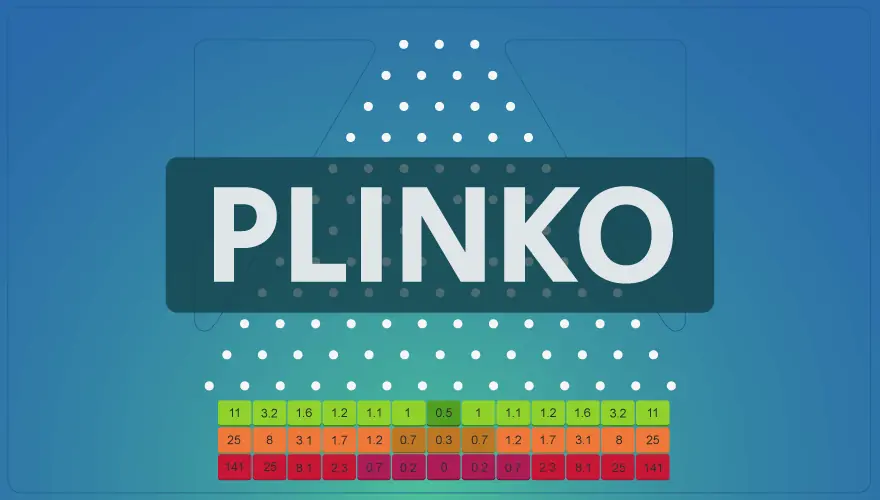
Plinko is a chance-based casino game built around a vertical board filled with pegs. A player chooses a stake, often selects the number of rows and a risk level, then drops a ball from the top. As the ball collides with pegs on the way down, it changes direction repeatedly until it lands in one of the payout slots at the bottom. Each slot carries a multiplier, and that multiplier determines the return for the round.
Its appeal comes from a combination that is surprisingly rare in online gambling: instant readability and strong emotional pacing. You do not need to memorize paylines, bonus symbols, side bets, cluster rules, or card values. You can understand the round in a few seconds. But while the interface is simple, the anticipation is real. Every bounce creates the impression that the ball might still drift toward a better segment, and that visual uncertainty is a major part of the draw.
There is another reason Plinko stands out. It gives players the feeling of direct visibility into randomness. In many slots, the result is hidden behind spinning reels and internal calculations. In Plinko, the random path is displayed in front of you. That does not make the result more controllable, but it makes the uncertainty easier to watch and easier to feel. I often describe Plinko as a game that turns probability into a visible event rather than a hidden one.
At Mr pacho casino, as on other modern platforms, this format tends to catch the attention of players who want fast rounds and clear outcomes without the layered presentation of traditional slot content. It is especially noticeable among users who enjoy short decision loops: choose settings, drop, watch, repeat.
How the Plinko board actually works in practice
The basic structure is straightforward, but the practical meaning of each setting deserves a closer look. A standard Plinko round usually involves three core variables: stake size, row count, and risk level. These are not cosmetic controls. They shape the entire payout distribution and change how the session behaves over time.
When the ball is released, it descends through a triangular grid of pegs. At each collision, it moves left or right. Over many rounds, outcomes tend to cluster around the center of the board more often than the extreme edges. That is why the middle slots usually carry lower multipliers and the outer slots carry the most aggressive ones. Rare outcomes sit at the edges because the path needed to reach them is less common.
The number of rows matters because it increases the number of directional decisions the ball makes before reaching the bottom. More rows generally mean a wider spread of possible landing points and a more stretched payout map. In plain terms, a larger board can create more room for extreme multipliers, but it can also make those outcomes less frequent.
The risk setting is where the experience changes most sharply. Low risk tends to compress the multiplier range. The center remains dominant, but the difference between ordinary and top outcomes is less dramatic. High risk does the opposite: it pushes more value into rare edge results and makes ordinary landings comparatively less rewarding. This is why two players can technically play the same Plinko title and come away describing it as completely different.
| Setting | What it changes | What it means for the player |
|---|---|---|
| Stake | Base value of each drop | Directly affects bankroll pressure and session length |
| Rows | Path length and payout spread | Can increase outcome range and change the feel of variance |
| Risk level | Distribution of multipliers | Determines whether the session feels smoother or more swing-heavy |
One practical point is worth stressing: the ball’s movement looks physical, but the gambling logic is still mathematical. The pegs create the visual path, yet the meaningful issue for the player is not physics in a literal sense. It is the probability distribution behind where the ball is likely to finish. The board is the theatre of chance; the multiplier map is the substance.
Why the game feels so engaging despite its simple layout
Plinko’s strongest design trick is that it compresses suspense into a very short window. A slot round may involve reel spin time, symbol stops, line evaluation, and maybe a feature trigger. Plinko strips all of that away. The suspense begins immediately after the drop and peaks right before the landing. There is almost no dead time.
That creates a distinct session rhythm. You are not waiting for a bonus sequence to rescue a long stretch of weak spins. Instead, each round is self-contained. The emotional cycle is quick: choice, release, bounce sequence, result. This loop can feel efficient and satisfying, especially for players who dislike the stop-start structure of many video slots.
At the same time, the speed can be dangerous if you are not paying attention. Because each round resolves so quickly, it is easy to underestimate how many bets you have made in a short period. This is one of the most important practical realities of Mrpacho casino Plinko. The interface may feel lighter than a slot, but bankroll movement can be faster precisely because there are fewer interruptions. When the support team feels slow, withdrawal limits overview explains the fastest ways to reach them.
I have seen many players make the same mistake with Plinko: they interpret visual simplicity as low intensity. In reality, the opposite is often true. The game removes narrative clutter and leaves you alone with repeated exposure to variance. That can feel clean and exciting, but it can also become draining if you chase edge multipliers for too long.
A memorable observation here is that Plinko often feels calmer than it really is. The board looks almost casual, yet the emotional pressure rises sharply when you switch to higher risk. Another detail that stands out is how often players remember the path of a near-miss ball more vividly than the actual result. That is a very different psychological effect from a slot reel stop. Plinko turns “almost” into a visible shape.
Risk levels, session volatility, and who should treat this game carefully
If you are considering Plinko, you need to understand one thing before anything else: the risk setting is not a side option. It is the core personality of the session. Low, medium, and high risk modes can produce radically different bankroll patterns even when the stake remains the same.
In lower-risk configurations, you will usually see more modest and more frequent returns. That does not guarantee profit, of course, but it often creates a steadier cadence. The game feels less punishing in short stretches, and the session can be easier to manage if your goal is to explore the board without dramatic swings.
Higher-risk settings are built around the opposite idea. They shift more theoretical value toward rare top-end multipliers. The trade-off is obvious: dry runs can be longer, and ordinary landings may do very little to support your balance. This is where Plinko becomes appealing to players who actively seek swing-heavy sessions, but it is also where disappointment arrives fastest for anyone expecting regular meaningful returns.
From a practical standpoint, I would break the fit like this:
- Good fit: players who enjoy fast rounds, visible randomness, simple controls, and the option to choose between steadier and more aggressive payout profiles.
- Less suitable: players who want layered bonus features, narrative presentation, strategic depth, or a slower tempo that naturally limits bet frequency.
Plinko can also frustrate players who confuse “easy to understand” with “easy to manage.” Those are not the same thing. The rules are simple. The bankroll behavior may not be.
What probabilities and outcomes really mean during a live session
Many players ask whether Plinko can be predicted by watching previous drops. In practical terms, no. Each round is independent, and past landings do not create a reliable pattern for future ones. If a ball has missed the highest multiplier twenty times in a row, that does not mean the next one is “due.” This misunderstanding causes a lot of poor decision-making in fast top Mrpacho Casino games before depositing real money.
What matters more is understanding the structure of likely outcomes. The center of the board tends to receive more landings over time, while the outer edges remain less common. That is why the highest multipliers are positioned where they are. The game is not hiding this from you; it is showing you the logic visually. The problem is that many players focus on the rare multiplier rather than the frequency needed to reach it.
Here is the practical reading of probability in Plinko:
- The most eye-catching multipliers are usually the least likely to land.
- Changing rows and risk can alter the distribution enough to change the entire feel of the session.
- Short-term results can look extreme in either direction, especially in high-risk mode.
Another useful observation: Plinko often creates a stronger illusion of momentum than slots do. A few decent landings in a row can make the board feel “warm,” while a series of weak results can make it feel hostile. Neither interpretation is reliable. The board does not develop a mood. What changes is your perception of variance.
| Session style | Typical feel | Main caution |
|---|---|---|
| Low risk | More stable, less dramatic | Can seem safer than it really is over many quick rounds |
| Medium risk | Balanced between small returns and occasional stronger hits | Still capable of uneven stretches |
| High risk | Sharp swings, rare standout results | Bankroll can drop quickly during cold runs |
How Plinko differs from slots and other common casino formats
The easiest comparison is with classic slots, because that is where many players come from. In a slot, the core attraction often lies in combinations, bonus rounds, special symbols, expanding features, and escalating sequences. The entertainment value is partly mechanical and partly thematic. A slot can carry you through long sessions with audiovisual variation even when the actual return pattern is uneven.
Plinko works differently. It does not rely on theme, story, or layered bonus architecture. Its appeal is structural. The entire experience is built around one event repeated many times under adjustable conditions. That makes it cleaner, more transparent, and in some cases more intense.
Compared with roulette, Plinko shares the idea of a single decisive outcome, but the visual delivery is more dynamic. Compared with crash-style products, it offers less direct control over the moment of exit but a similar attraction to fast rounds and multiplier thinking. Compared with card games, it offers far less strategic involvement. You are not outplaying anyone or making tactical decisions after the round starts.
This difference matters because it shapes expectations. If you want a casino format that rewards attention to paytables, symbol behavior, and bonus timing, Plinko may feel too bare. If you want a format where the uncertainty is immediate, visible, and resolved in seconds, it can feel refreshingly direct.
Where Plinko performs well and where its weak spots appear
I think Plinko has several genuine strengths when judged on its own terms. First, it is accessible. New players can understand the round structure almost instantly. Second, it offers clear customization through rows and risk levels, which gives the player some control over the type of volatility they are willing to face. Third, it delivers strong visual suspense without requiring a complex interface.
Those are real advantages, but they do not tell the whole story. The weak spots are just as important. Because the core loop is repetitive by design, some players will find that the novelty wears off quickly. There are no bonus chapters to break up the flow, no evolving feature set, and little sense of progression beyond changing the settings. If you need variety inside the round structure itself, Plinko can start to feel one-note. A quick read of Mrpacho Casino promotions guide for bonus hunters among Australian players answers most questions about limits and account settings.
Another limitation is psychological rather than mechanical. The game’s clean layout can make aggressive sessions feel deceptively harmless. A player may think, “I’m just dropping another ball,” without noticing how rapidly those drops accumulate. This is not a flaw in the software; it is a built-in consequence of the format.
In analytical terms, the strengths and limits look like this:
- Strong points: fast understanding, visible outcome path, adjustable session profile, immediate suspense.
- Limitations: repetitive loop, limited feature depth, high-speed bankroll exposure, strong temptation to chase rare multipliers.
The most important takeaway is that Plinko succeeds when you judge it as a precision gambling format, not as a replacement for feature-rich slots. It is lean by design.
What to check before launching Mrpacho casino Plinko
Before starting a session at Mrpacho casino, I would suggest treating Plinko less like a casual click-and-watch product and more like a format that needs one minute of setup discipline. That minute can change the entire experience.
Start with the risk level. Do not choose high risk just because the top multiplier looks attractive. Ask yourself whether your bankroll can absorb long stretches of ordinary results. If the answer is no, lower the setting. The same logic applies to row count: more rows can make the board more interesting, but they can also stretch the distribution in ways that increase swinginess.
Then look at your stake in relation to speed. This is critical. A stake that seems modest in a slow slot can become expensive in Plinko because the rounds resolve so quickly. If you want a longer session, reduce the amount per drop rather than assuming the pace will regulate itself.
I also recommend using a demo version first if it is available. Not because demo play reveals a secret pattern—it does not—but because it helps you understand how the chosen settings feel over twenty or thirty drops. That is often enough to show whether the session profile matches your tolerance for fluctuation.
Here is the short pre-launch checklist I consider useful:
- Choose a risk level based on bankroll tolerance, not on headline multipliers.
- Set a stake with the game’s fast tempo in mind.
- Test rows and pacing in demo mode if possible.
- Decide in advance whether you are playing for steadier action or for rare high-end outcomes.
If you skip these steps, Plinko can feel random in a bad way. If you take them seriously, the game becomes much easier to evaluate on its actual merits.
Final verdict on the Plinko experience
Mrpacho casino Plinko offers a very specific kind of casino experience: fast, visible, stripped back, and heavily shaped by how you configure the risk. That is its real identity. It is not a feature-heavy slot replacement, and it is not a strategy game disguised as a casual board. It is a high-clarity chance format where the main appeal comes from watching probability play out in real time.
Its strongest qualities are easy to identify. The rules are simple, the suspense is immediate, and the settings can meaningfully change the tone of a session. For players who enjoy short rounds and want a direct relationship with variance, that can be highly effective. The game also does a rare thing well: it makes randomness feel visible rather than hidden behind layers of presentation.
The caution point is just as clear. Simplicity does not equal softness. In higher-risk modes especially, Plinko can be sharper than it looks. The pace is quick, the temptation to chase top multipliers is real, and bankroll swings can arrive faster than many players expect. That is why this format suits some users extremely well and leaves others cold after a short trial.
My honest conclusion is that Plinko is worth trying if you want a clean, high-tempo gambling product with adjustable intensity and no unnecessary clutter. It is less suitable if you prefer deep bonus structures, evolving round design, or a slower style that naturally reduces betting frequency. In other words, Plinko does not try to be everything. It offers one core experience and leans into it hard. If that experience matches your preferences, it can be very effective. If not, you will know fairly quickly.
FAQ
How does Plinko work when a ball is dropped?
A ball is released from the top and falls through rows of pegs, bouncing unpredictably. It finally lands in a grid section that determines the multiplier for that round. Each drop is a separate round, so multipliers apply to that specific landing.
Where is the Plinko lobby or game launch button located on the official site?
Plinko is typically opened from the game lobby area, then launched inside the games section. On Mrpacho, it is shown as a standalone game entry so the launch button appears directly next to Plinko. If the lobby uses filters, selecting the relevant game type helps reach Plinko faster.
What risk level does Plinko have compared with lower-volatility slots?
Plinko’s results depend on where the ball lands, so swings can feel frequent compared with some slot mechanics. Multipliers can change quickly between rounds, which may increase variance. A calmer session often means keeping a smaller stake and limiting the number of drops.
How is the demo mode different from real-money play in Plinko?
Demo mode uses virtual funds and does not affect account balance. Real-money play stakes funds from the casino account and results impact the balance. The game mechanics stay the same, including the peg bounces and multiplier landing.
What should be checked before starting Plinko after login?
Account access must be successful first, then the correct balance should be visible. If real-money play is selected, verify the currency and stake. When something looks off, switching to the correct login method or using support can resolve access issues faster.
Why might Plinko show different multipliers across rounds, even with the same stake?
The multiplier is determined by the ball’s landing section in that specific drop. Even identical stake settings do not control where the ball lands. Each round is independent, so outcomes can vary significantly.
How does current mirror access work if the Plinko page fails to load?
Mirror access provides an alternative working entry point when a particular route is unavailable. If Plinko does not load, using the current mirror option helps resume play without creating a new account. After access is restored, re-open the game lobby and relaunch Plinko.
What is a common beginner mistake when playing Plinko with real funds?
Many players drop several balls without re-checking the stake after a setting change. Another frequent mistake is switching between demo and real-money and assuming the same balance applies. Keeping an eye on the stake and confirming real-money mode before each drop reduces unwanted surprises.
